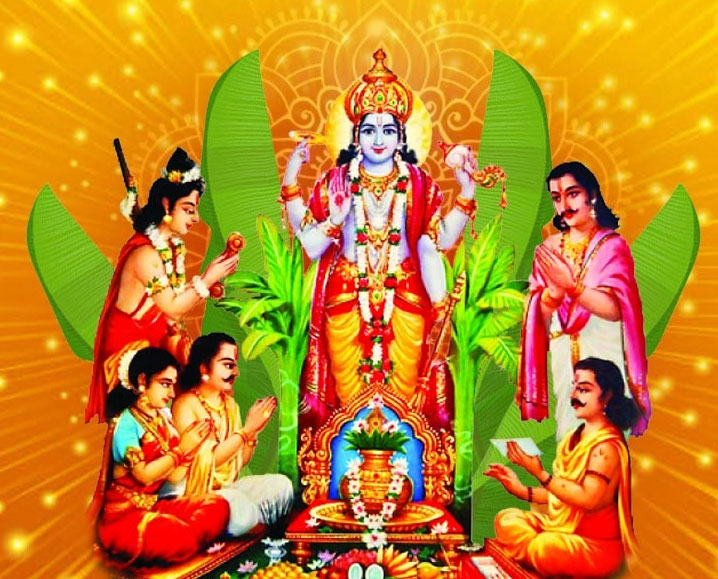
Lord Satyanarayan – The Divine Form of Truth and Righteousness
Lord Satyanarayan is a revered form of Lord Vishnu and is worshipped with devotion by Hindu families seeking divine blessings, peace, prosperity, happiness, and well-being. The name Satyanarayan is associated with truth and righteousness, and worship of the deity is traditionally connected with faith, gratitude, devotion, and living according to dharma.
Satyanarayan Puja is one of the popular Hindu religious observances performed in homes and temples. Devotees organize the puja on auspicious occasions such as weddings, housewarming ceremonies, birthdays, festivals, and after the fulfillment of important wishes. Families may also perform the puja as a regular devotional practice according to their traditions.
A central part of Satyanarayan Puja is the recitation of the Satyanarayan Katha, which consists of traditional stories emphasizing the importance of truth, devotion, faith, and keeping one’s promises. Devotees listen to the Katha and participate in the puja while seeking the blessings of Lord Satyanarayan.
Devotional practices associated with Lord Satyanarayan include Satyanarayan Mantra, Satyanarayan Aarti, Satyanarayan Katha, Satyanarayan Vrat, and Vishnu prayers.
On SanatanMantras.com, you can explore devotional content dedicated to Lord Satyanarayan, including Satyanarayan Katha, Puja Vidhi, Mantras, Aarti, Vrat information, Prasad traditions, and related Vishnu devotional resources.
Worship of Lord Satyanarayan
The worship of Lord Satyanarayan is an important devotional practice for many Hindu families. As a form of Lord Vishnu, Satyanarayan is worshipped with faith and devotion, with devotees seeking blessings for peace, prosperity, happiness, harmony, and family well-being.
The Satyanarayan Puja is commonly performed on auspicious occasions and during important milestones in family life. The exact rituals, timing, offerings, and customs can vary according to regional, family, and religious traditions.
Satyanarayan Katha
The Satyanarayan Katha is a central part of Satyanarayan Puja. Devotees listen to or recite the traditional Katha during the worship ceremony.
The stories associated with Satyanarayan Katha emphasize the importance of truth, faith, devotion, gratitude, keeping promises, and righteous conduct. The Katha is traditionally heard by family members and other devotees participating in the puja.
Satyanarayan Puja
Satyanarayan Puja involves prayers and devotional rituals dedicated to Lord Satyanarayan. Families may perform the puja on auspicious days or special occasions such as weddings, housewarming ceremonies, birthdays, and other significant events.
Devotees traditionally prepare a sacred space, invoke Lord Satyanarayan, perform the prescribed puja, listen to the Katha, offer devotional offerings, and conclude the ceremony with Aarti and Prasad according to their family traditions.
Satyanarayan Vrat
The Satyanarayan Vrat is a devotional observance associated with worship of Lord Satyanarayan. Devotees may observe a fast or follow specific dietary practices according to their family and regional traditions.
The purpose of the observance is centered on devotion, prayer, faith, gratitude, and remembrance of Lord Satyanarayan.
Satyanarayan Mantras and Prayers
Devotees can include Satyanarayan Mantras, Vishnu Mantras, Satyanarayan Aarti, and other devotional prayers during the puja.
Chanting mantras and singing aarti are traditional ways of expressing devotion and seeking the blessings of the deity.
Satyanarayan Puja Occasions
Satyanarayan Puja is performed by many families on different auspicious occasions. Common occasions include:
- Housewarming or Griha Pravesh
- Weddings and marriage-related ceremonies
- Birthdays
- Family celebrations
- Religious festivals
- After fulfilling a personal vow or wish
- Other auspicious family occasions
The specific occasion and method of worship may differ according to family and regional traditions.
Satyanarayan Puja Prasad
Prasad is an important part of Satyanarayan Puja. A traditional preparation commonly associated with the puja is made from ingredients such as semolina, sugar, ghee, milk, and banana, although recipes and names can vary across regions and families.
The Prasad is offered to Lord Satyanarayan and then distributed among devotees after the completion of the puja.
Lord Satyanarayan and Lord Vishnu
Lord Satyanarayan is traditionally understood as a form of Lord Vishnu, connecting Satyanarayan worship with the broader Vaishnava devotional tradition.
Devotees may therefore also explore Vishnu mantras, Vishnu Aarti, Vishnu Sahasranama, and other Vishnu-related devotional resources alongside Satyanarayan Puja.
Satyanarayan Devotional Collection
On SanatanMantras.com, you can explore devotional resources dedicated to Lord Satyanarayan, including Satyanarayan Katha, Satyanarayan Puja Vidhi, Satyanarayan Mantra, Satyanarayan Aarti, Satyanarayan Vrat, Prasad information, and related Lord Vishnu prayers.
Whether you are preparing for a Satyanarayan Puja at home, looking for the Satyanarayan Katha, or exploring the devotional significance of this form of Lord Vishnu, this collection provides useful spiritual resources in one place.
Explore the Satyanarayan collection and discover Katha, mantras, aarti, puja information, prayers, and other devotional resources dedicated to Lord Satyanarayan.